Bloodwork and imaging describe risk. Functional performance testing describes what you can still do: how much oxygen you can use at peak effort, and how much force your hands can produce. At Helix Advanced Medicine we use VO2 max and grip strength as two short, repeatable measures of health span. They do not replace a physical exam, EKG, or lipids. Low scores are training problems more often than they are moral failures. High scores do not cancel plaque, blood pressure, or cancer screening.
VO2 max
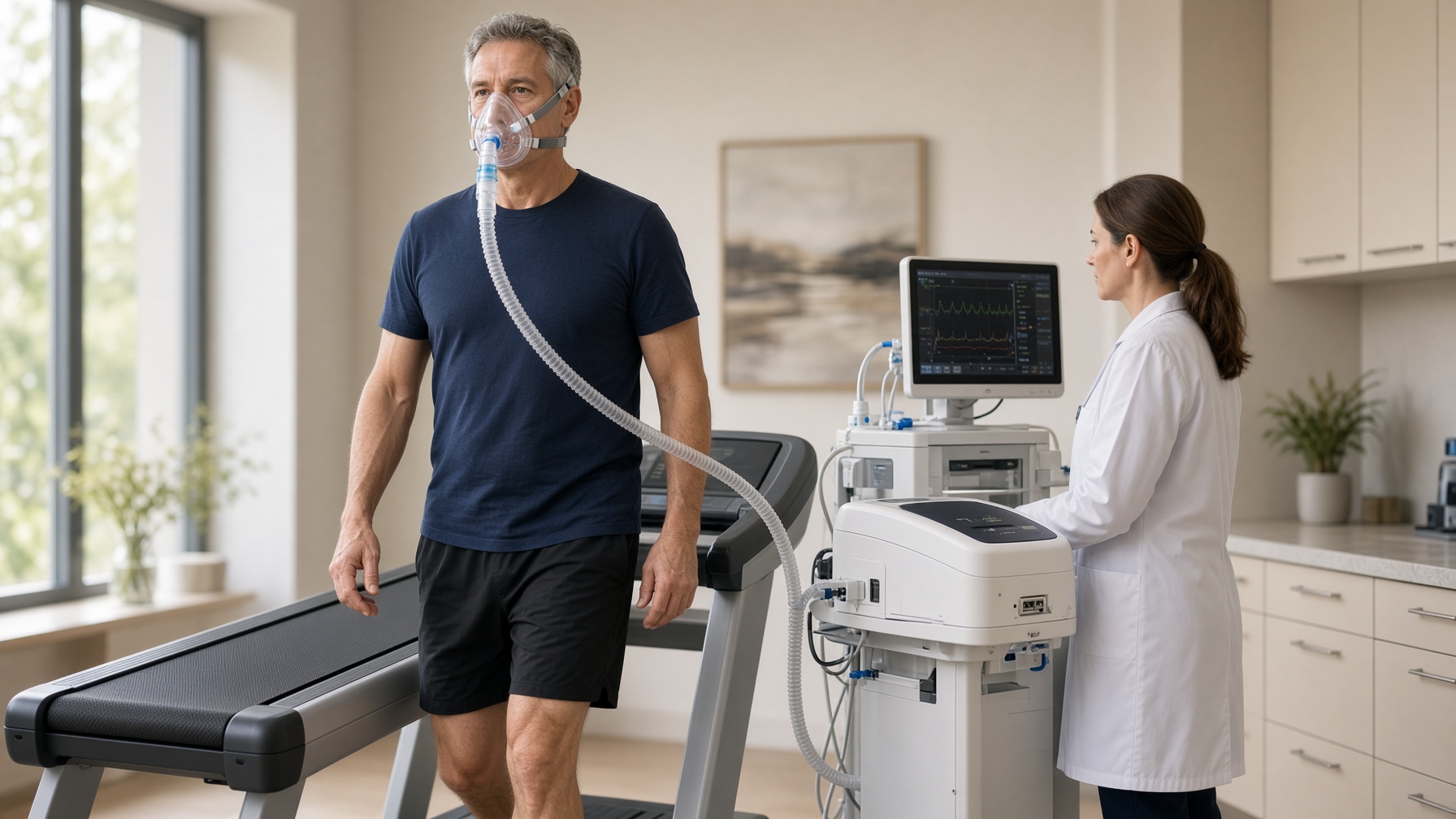
VO2 max is the maximum rate at which your body can use oxygen during hard exercise. It is the best widely available number for cardiorespiratory fitness. Higher values are consistently linked with lower all-cause and cardiovascular mortality in population studies. Testing is a supervised graded exercise assessment. It is not a chest-pain protocol.
Grip strength
Grip strength is a simple dynamometer squeeze. In older and midlife adults it tracks muscle function, frailty risk, and vitality better than many people expect. Weak grip is associated with higher rates of disability and, in research cohorts, with worse survival—usually as a marker of overall muscle and illness burden, not because the hand itself is the disease.
How we read the two together
- Low VO2 max, adequate grip — aerobic and zone-based training; look at lungs, weight, anemia, thyroid
- Adequate VO2 max, weak grip — resistance training, protein, consider inflammation, neuropathy, or hormone context
- Both low — treat as low reserve: structured training, metabolic and inflammatory workup, closer follow-up
- Both high — keep the program; do not skip lipids, CAC, or cancer screening